

Post-July 4 Recipes
What to do with that monster watermelon & other holiday BBQ leftovers


Welcome back to Chef@Holmes after a week-long break for Independence Day. I hope everyone had a great holiday.
We had a big BBQ for the 4th of July, and then absconded to Rehoboth for a week of total blackout vacay madness. No cooking, no recipe writing. Just a lot of lazing about, and eating out.
I had some of the best oysters of my life on the Eastern Shore this year, and I also have a semi-shameful confession to make. A late night Philly Cheese Steak sandwich from Gus & Gus on the boardwalk was a special kind of junk foodgasm that merits a tip o’ the hat. It was the perfect blend of melty cheese, beautifully browned beef brisket and onions, and an unexpected hot and tangy pickled veg spread on a crispy, toasted sub roll.
Old man Gus put that baby together bent over the griddle as if in permanent reverence at the altar of his trade. I would never dream of trying to imitate his masterpiece. Sorry to thumb my nose at high brow food for a minute, but I do secretly worship the art of greasy street food of all kinds. Amen.
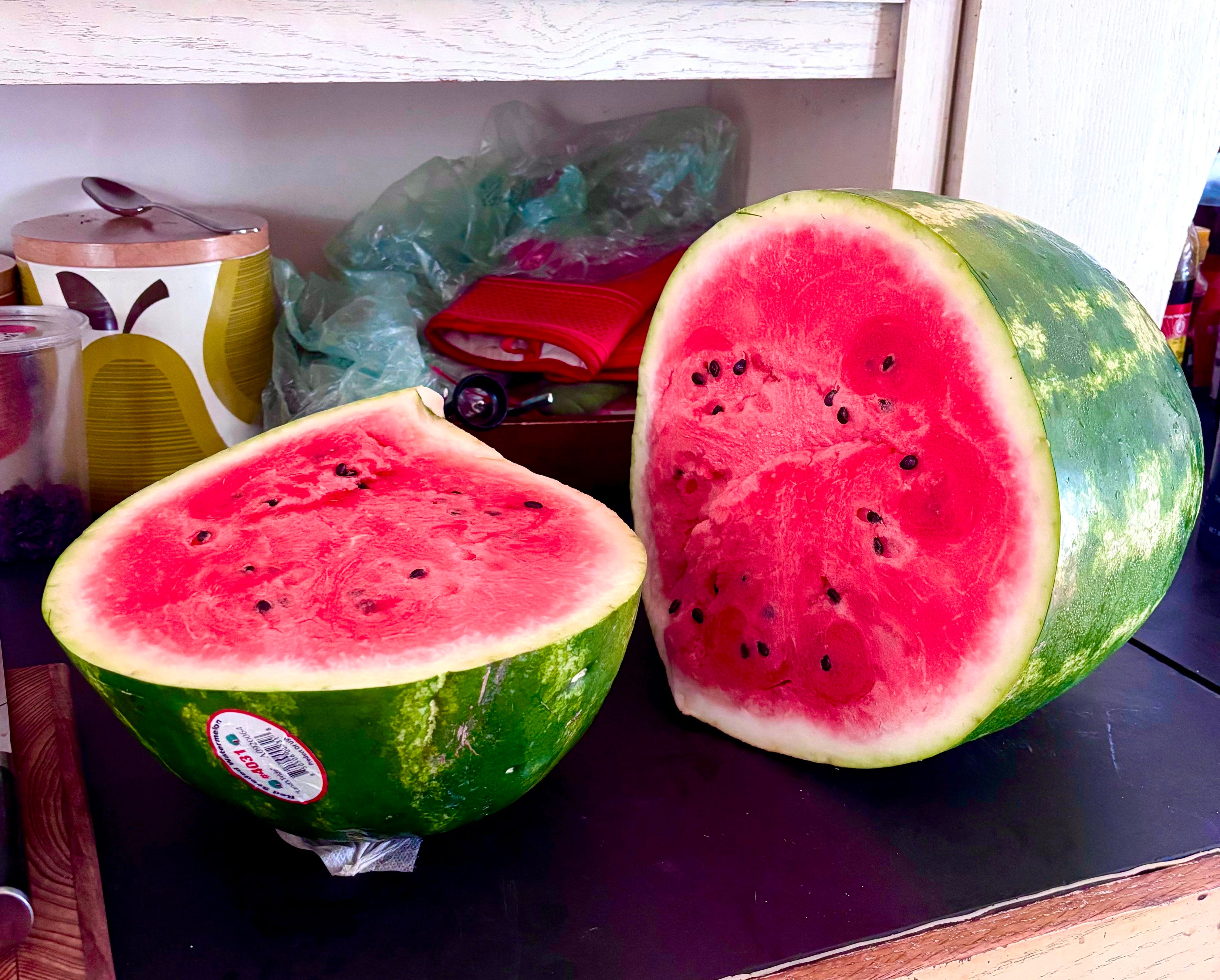
On return to DC, there was a giant watermelon we forgot to serve at the July 4 BBQ waiting to be put to use. Instead of gorging ourselves endlessly on fresh cut wedges, which I find a bore, I whipped up two of my favorite savory summer dishes.
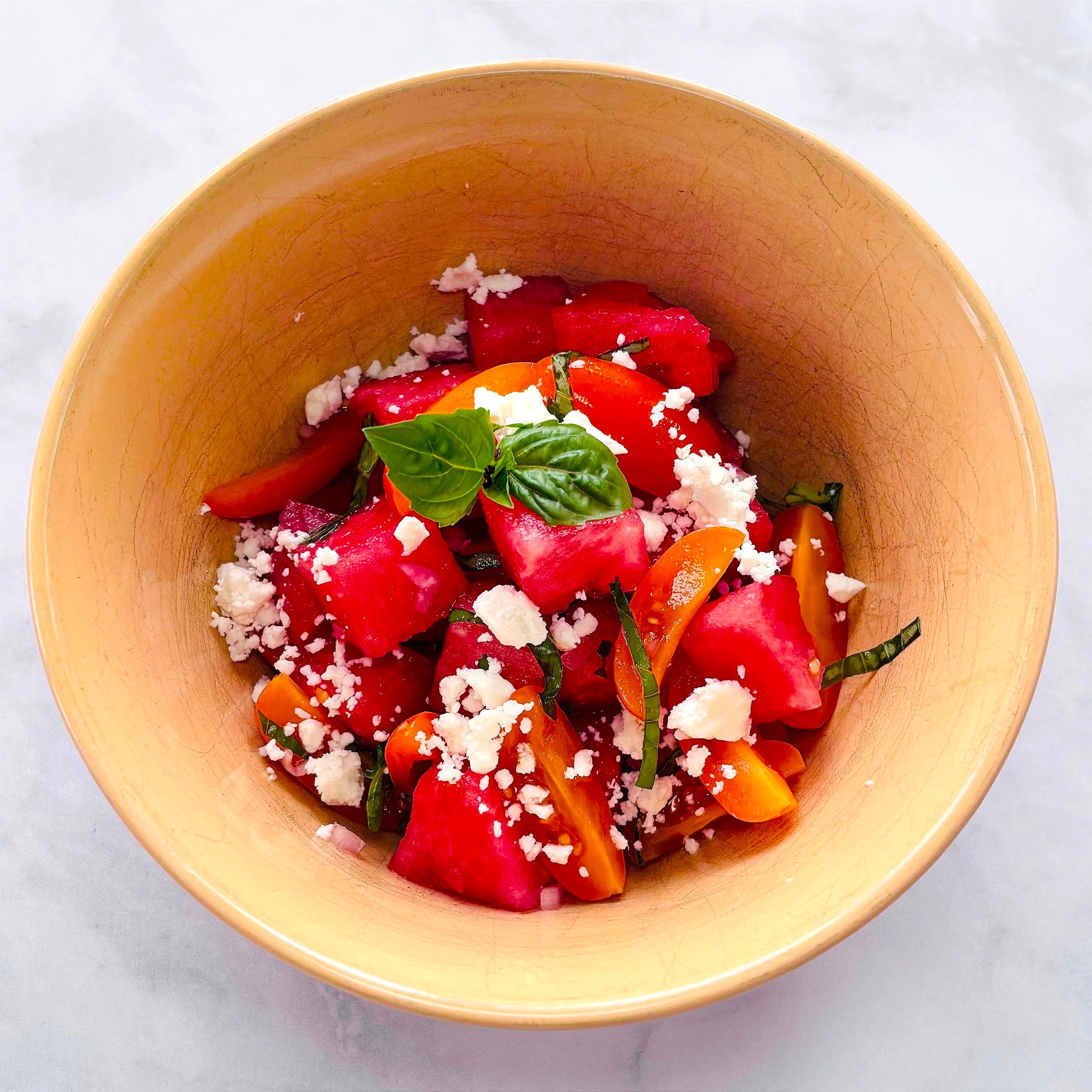
FETA & WATERMELON SALAD
4 servings
4 cups watermelon, cubed (seeds removed)
2 cups chopped cherry tomatoes
1 small shallot, finely diced
½ cup feta cheese, crumbled
¼ cup fresh basil, chopped or torn
VINAIGRETTE
2 tbsp balsamic vinegar
3 tbsp extra virgin olive oil
½ tsp honey
salt & freshly ground black pepper to taste
In a small bowl or jar, whisk together the balsamic vinegar, olive oil, honey, and a pinch of salt and pepper until emulsified. Set aside.
In a large mixing bowl, combine the watermelon, tomatoes, and diced shallots. Gently toss to combine.
Sprinkle the crumbled feta and fresh basil over the top. Gently fold in without mashing the watermelon.
Drizzle the balsamic vinaigrette over the salad just before serving. Add salt and pepper to taste.
Best served chilled or at room temperature. Avoid letting it sit too long after adding the dressing, as the watermelon can “cook” and release too much liquid.
📌 Tips & Variations
Add a handful of arugula for more bite, toasted pine nuts or slivered almonds for crunch, or cucumber for extra freshness.
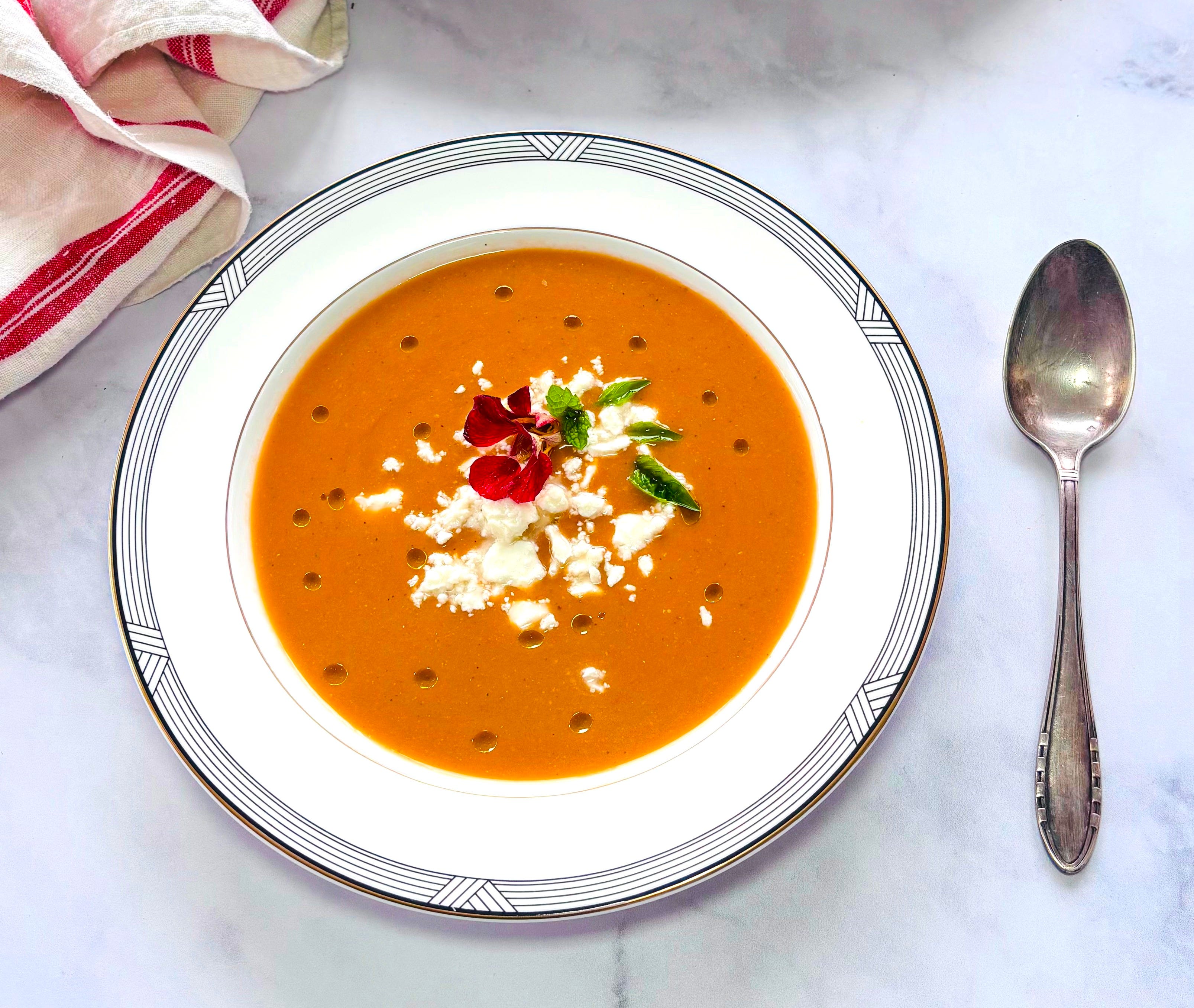
I have been waiting for tomato season to roll around so I could get to work on a sweet gazpacho recipe. When I worked at Loiseau du Temps, I used to make one with peaches that did a deeply satisfying dance on my tastebuds between sweet, sour, and salty notes. So I set aside an entire morning to hack away at this monster watermelon, tweaking a new recipe I am really quite pleased with.
This is the kind of cooking that feels like magic to me. Little by little, I add ingredients until a kind of savory symphony writes itself. In the end, the addition of a mere fraction of one element is the precise note that makes the whole dish click into place. There it is. The sweet spot!
Use this recipe as a guide. Take your time building layers of flavor, and let it sit a few hours in the fridge before tasting, making adjustments if necessary.
WATERMELON GAZPACHO
12 servings
8–10 large heirloom tomatoes, roughly chopped
3 green bell peppers, cored & roughly chopped
6 mini cucumbers, chopped (skin on)
3 medium sweet onions, peeled & chopped
6 large garlic cloves, peeled, germ removed, & crushed
5–6 cups seedless watermelon, chopped (about ½ of a medium melon)
1 cup white balsamic vinegar
2 tsp apple cider vinegar
juice of ½ large lemon
4 tsp pomegranate molasses
1½ cup panko breadcrumbs
1 cup olive oil
1 small handful fresh basil leaves
1 sprig of mint
½ tsp cayenne pepper (optional)
salt and black pepper, to taste
crumbled feta cheese (for serving)
Roughly chop all the vegetables and add to a large pot with 1 cup panko breadcrumbs.
Using a hand immersion blender blend until smooth.
Add vinegars, lemon juice, pomegranate molasses, seasonings, and fresh herbs in batches and blend until the desired flavor is achieved.
Allow the bread crumbs to expand for about 15 minutes and blend again.
If the soup is too liquid add more bread crumbs.
Emulsify with olive oil. With the blender running on low, slowly drizzle in the olive oil to emulsify and create a silky texture.
Adjust for acidity and seasoning if necessary.
Cover and refrigerate for at least 2–3 hours, or overnight for best flavor.
After chilling, taste and adjust seasoning as needed — more vinegar or lemon for tang, salt/pepper for balance, or honey for sweetness.
Ladle into bowls and garnish with a feta cheese, a drizzle of olive oil, and a turn of freshly cracked pepper.
Keeps well in the fridge for up to 3 days.
📌 Tips & Variations
For extra crunch, top with garlic croutons or diced raw veggies before serving.

The amount of breadcrumbs needed will depend on how watery your produce is, so add ⅓ of the recommended quantities at a time. Also, the breadcrumbs will take time to swell and absorb the liquid, so it’s best to let it sit for 20 minutes or so before adding more. That way you know exactly the consistency you’re working with.
Go easy on the acid. The amount of acidity you need to get the right balance will depend on how acidic your tomatoes are. Add ⅓ of the recommended quantities at a time, and taste for balance. You want something tangy, sweet, and savory. White balsamic vinegar is not that acidic, and slightly sweet. Apple cider vinegar is more tart and adds earthy complexity. Lemon juice brings freshness and brightness that you won’t get from the vinegars.
Similarly go easy on the honey if your tomatoes and/or watermelon are particularly sweet. You may not need it at all.
It is best to chill the soup and taste for seasoning before serving. Cold dishes always require more salt than hot ones. Our perception of saltiness decreases as the temperature goes down.
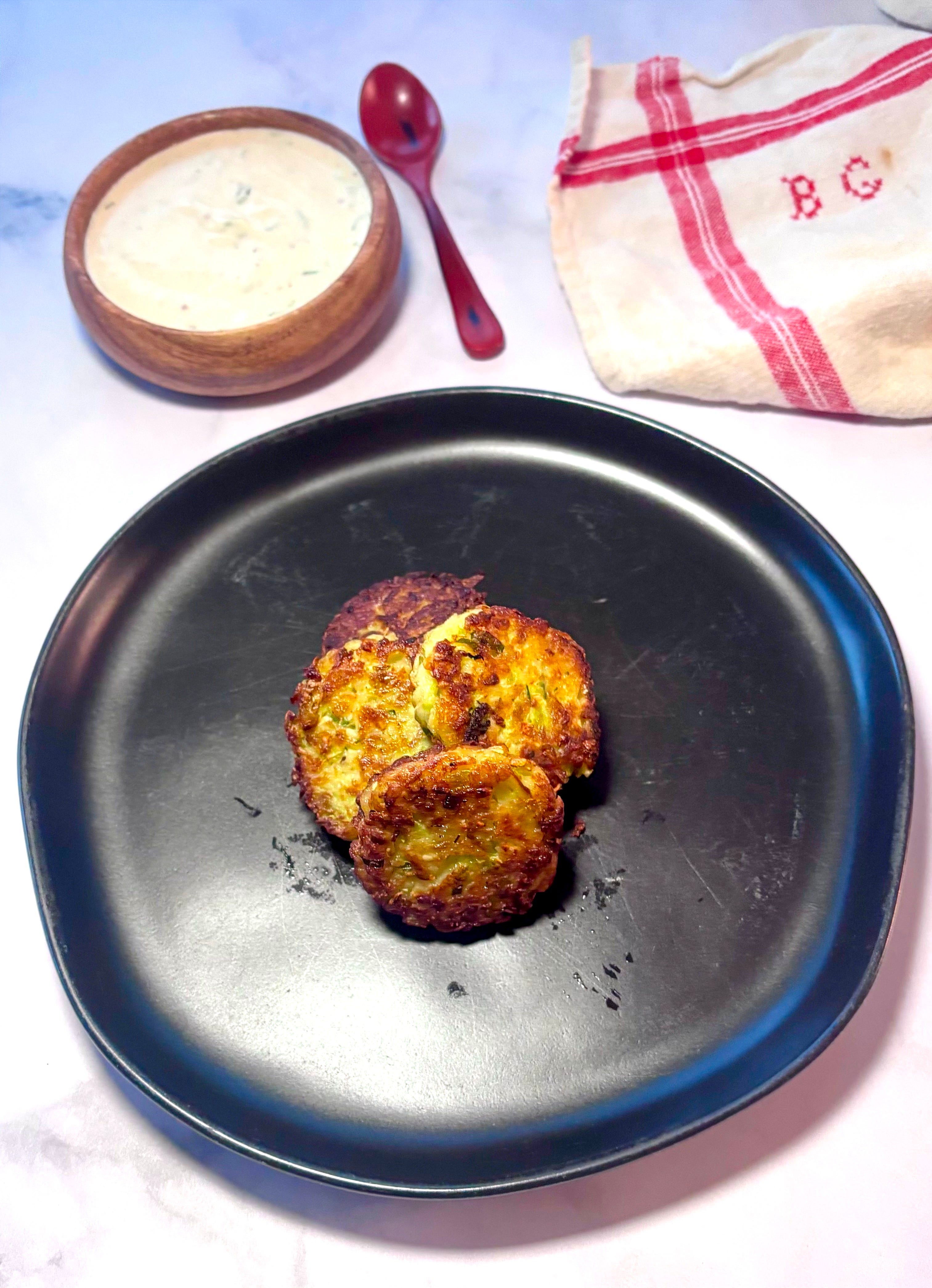
My zucchini bush had two huge fruit on the vine when I got home, so naturally I was inclined to turn to the classic zucchini fritters solution. It seems like an easy task on its face, but it’s actually really tricky to obtain the right textures. You want something that’s golden brown and crunchy on the outside, fluffy and moist on the inside. I had to mess around with this recipe quite a bit before getting something that would hold together when fried. It was delicious, but I am going to revisit the mighty zucchini fritter again many times this summer, with the goal of developing a fool-proof, holy grail base recipe.
This recipe includes Nom Nom Paleo’s Magic Mushroom Powder, which contrary to its official name, does not contain any wacky mushrooms. It’s a porcini-based powder that I have been toying around with when I’m looking for an extra umami accent.
ZUCCHINI FRITTERS
2 servings
FRITTERS
2 large zucchini, grated
1 large garlic clove, finely grated or minced
2–3 scallions, thinly sliced
1 egg
1 tbsp chopped fresh dill
2 tsp chopped fresh tarragon
1 tsp lemon zest
1 tsp lemon juice
dash of Worcestershire sauce (about ½ tsp)
¼ tsp salt (plus extra for straining zucchini)
2 tbsp cornstarch (more if needed)
grapeseed oil for frying (or any neutral oil)
½ panko breadcrumbs
freshly ground black pepper, to taste
YOGHURT DIPPING SAUCE
½ cup plain Greek yogurt
1 tsp finely chopped mint (or more to taste)
1 small garlic clove, grated
zest of 1 lemon
1 tsp lemon juice
1 tsp olive oil
salt & pepper, to taste
Make the dipping sauce first so the flavors have time to develop. Mix the sauce ingredients together in a small bowl. Let it sit for 30 minutes covered in the fridge.
Grate the zucchini. Toss with about ½ tsp salt, and let it sit in a colander for 10–15 minutes.
Gather the zucchini in a clean kitchen towel of cheese cloth, and squeeze out as much water as you can.
In a large bowl, whip the egg with the scallions, dill, tarragon, garlic, lemon zest, lemon juice, and Worcestershire to combine.
Add the drained zucchini, cornstarch, breadcrumbs, salt and pepper. Stir until the mixture comes together. If it seems too wet, add a bit more breadcrumbs.
Heat a ¼ inch of oil in a skillet over medium heat.
Drop a single spoonful of the batter into the pan, flattening slightly. Cook 2–3 minutes per side or until golden brown and crisp. Drain on a paper towel-lined plate and taste for seasoning. Make adjustments if necessary before frying the rest of the batter.
Serve hot with chilled yoghurt sauce.
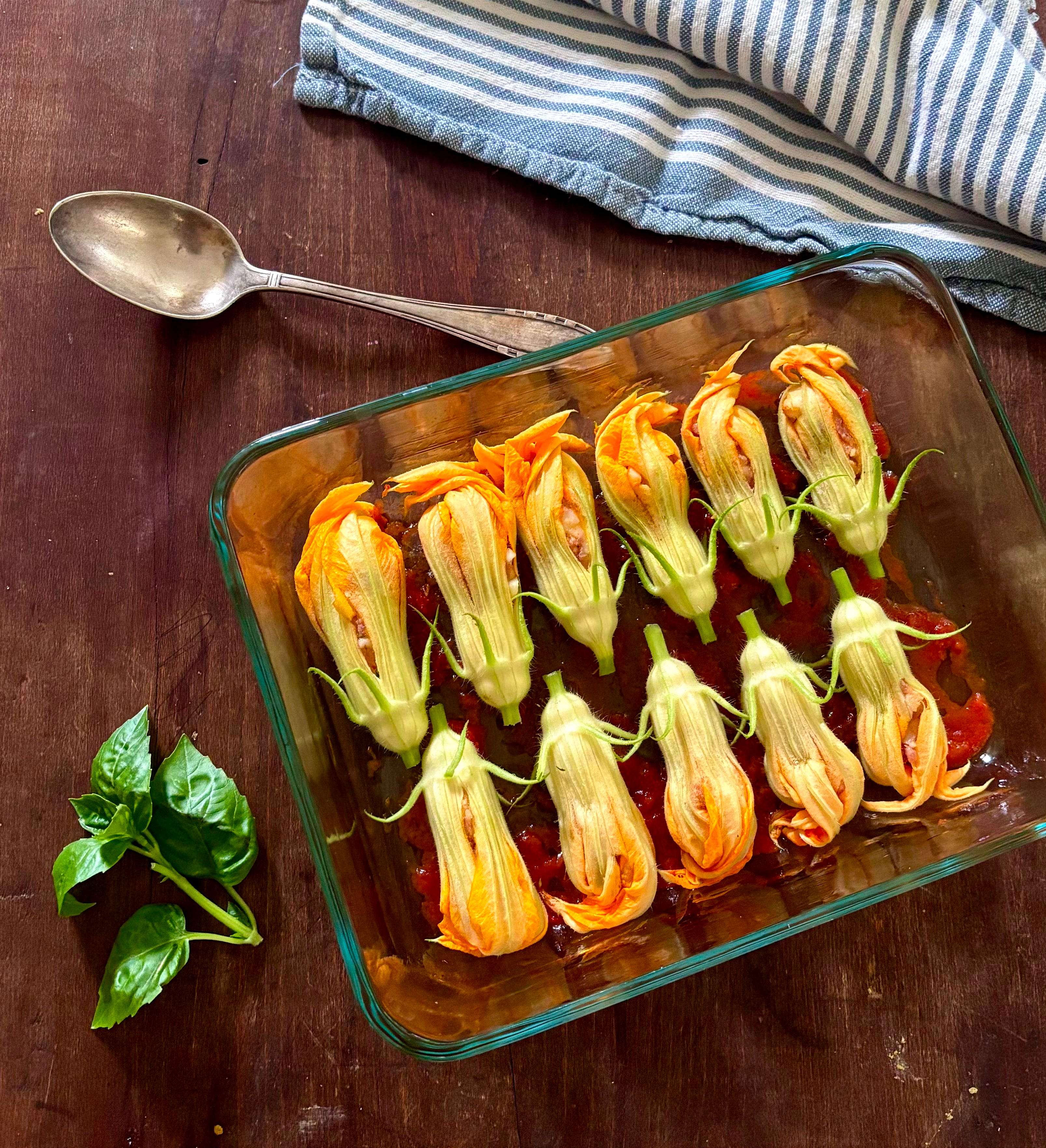
There were also a ton of zucchini flowers in bloom, and some leftover spicy Italian sausages from the BBQ. Thus I gave birth to these perfect bite-sized baked stuffed flowers. I cheated and used Rao’s Arrabbiata sauce, so this was actually really fast to throw together, yet really quite sophisticated. Our plates were clean in what seemed like the blink of an eye.
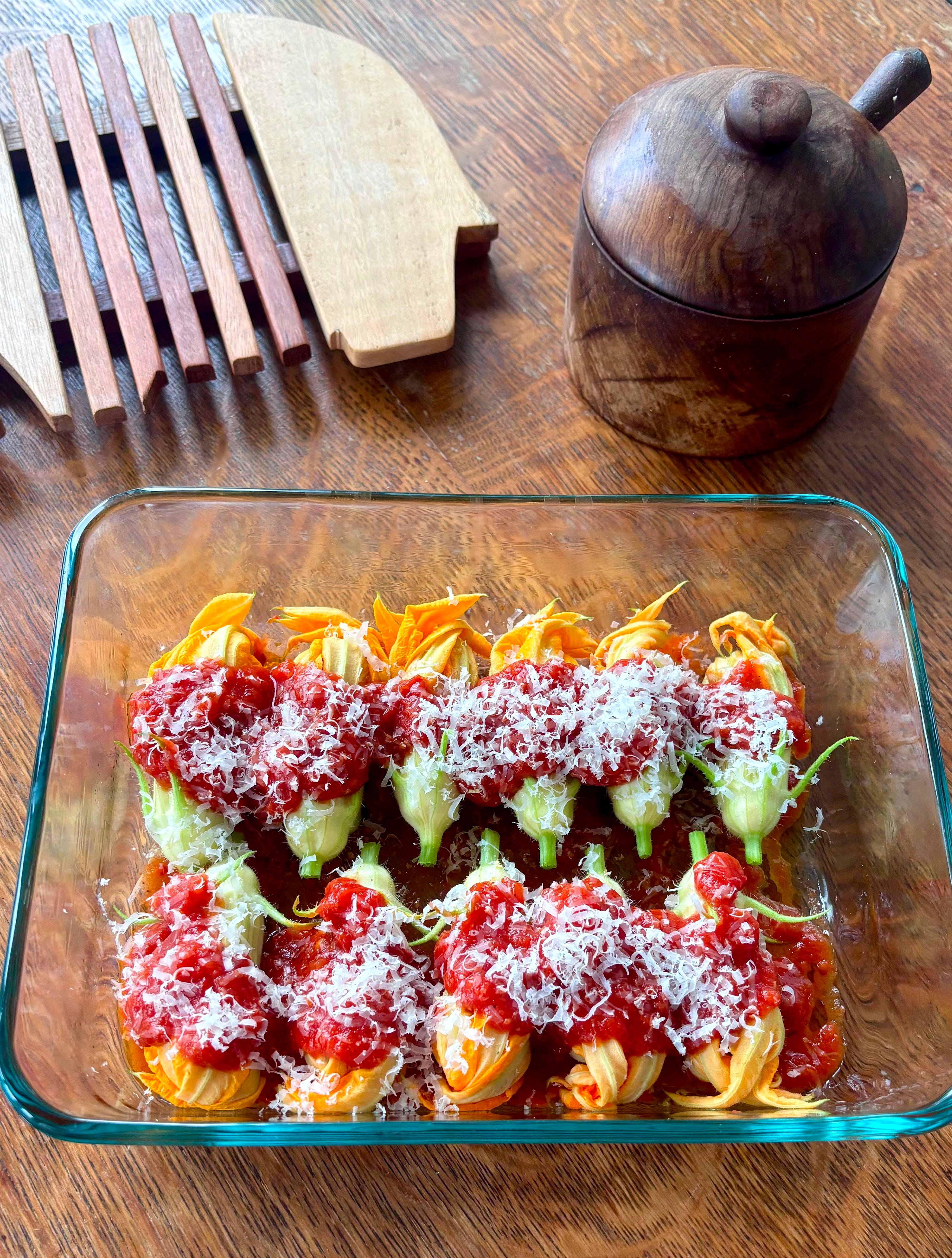
SPICY PORK SAUSAGE & MOZZARELLA-STUFFED ZUCCHINI FLOWERS
2 servings
12 fresh zucchini flowers, cleaned and stamens removed
1 spicy Italian sausage (Whole Foods brand), casing removed
½ medium onion, finely chopped and fried
1 small garlic clove, minced and fried
zest of ½ a lemon
1 tsp white balsamic vinegar
½ cup low-moisture mozzarella, finely diced or shredded
1½ tsp fresh oregano, chopped (or ½ tsp dried)
2 tablespoons chopped walnuts, lightly toasted
1½ cup Rao’s Arrabbiata sauce
parmesan cheese for topping
salt and black pepper, to taste
Preheat the oven to 400°F (205°C).
Using a paint brush or paper towel and some olive oil, grease the inside of a small baking dish.
Spread a thin layer of arrabbiata sauce on the bottom.
Make the filling:
In a skillet over medium heat, fry the onion and garlic until aromatic and slightly golden. In a medium-sized mixing bowl combine the fried onion and garlic, sausage meat, lemon zest, white balsamic vinegar, diced mozzarella, freshly chopped oregano, chopped walnuts, and a pinch of black pepper until well combined. It’s easiest to do this with clean hands.Gently open each flower and stuff with filling, doing your best not to tear the delicate flowers.
Twist the petals lightly to close or fold them over the filling, and place in the baking dish.
Drape the stuffed flowers with arrabbiata sauce, and top with grated parmesan.
Cover with tin foil and bake for 15 minutes.
Uncover and set the oven to broiler for a few minutes and finish cooking until the cheese has melted and the dish is slightly browned. Keep your eye closely trained as it can burn very easily at this stage.
Serve hot, and drizzle with olive oil and a few extra drops of white balsamic or a squeeze of lemon.
📌 Tips & Variations
Delicious as a starter, with crusty bread and a crisp white wine.
That’s it for this week. Follow me on Instagram where I post daily food content
Join the community
Your comments and feedback in the community help me to know what my readership wants and needs most. Please feel free to share your thoughts or ask for help. I make it a point to answer everyone.
This article includes affiliate links, which means I receive a commission on purchases made through clicks. I only ever share stuff I genuinely love.